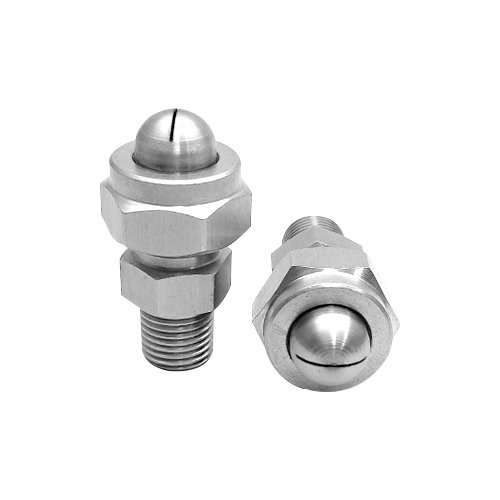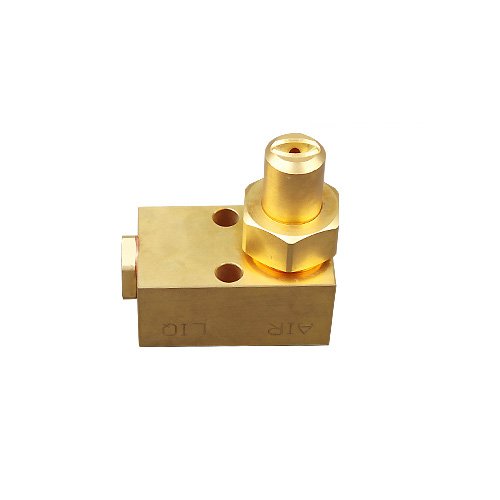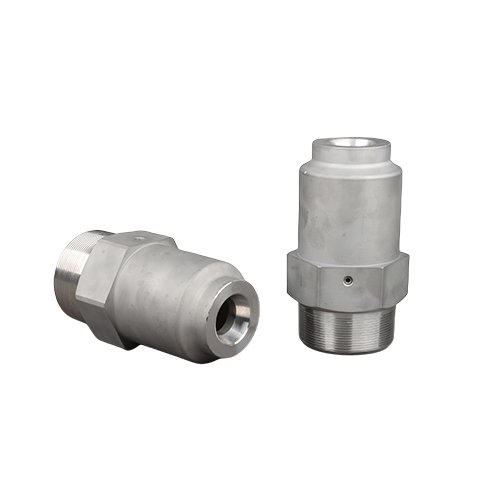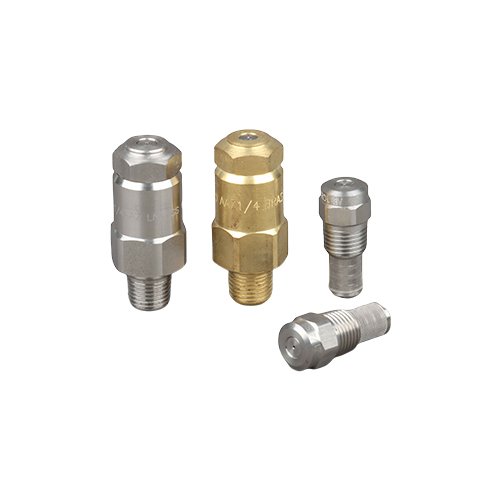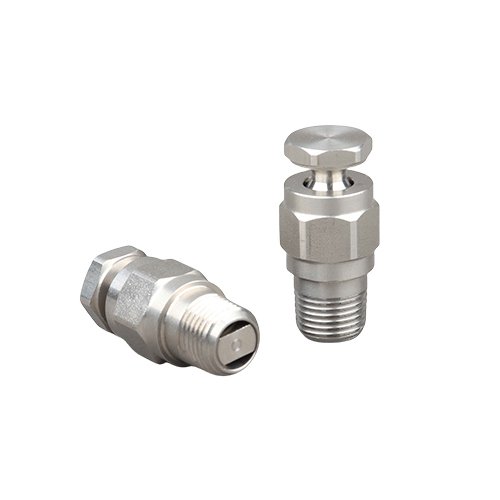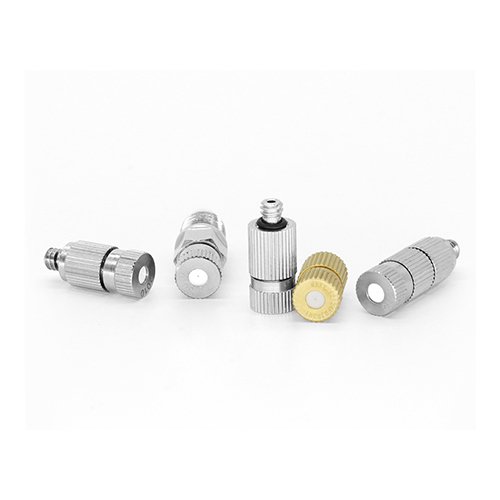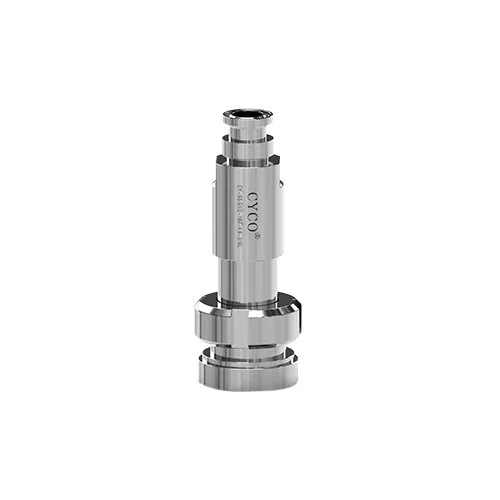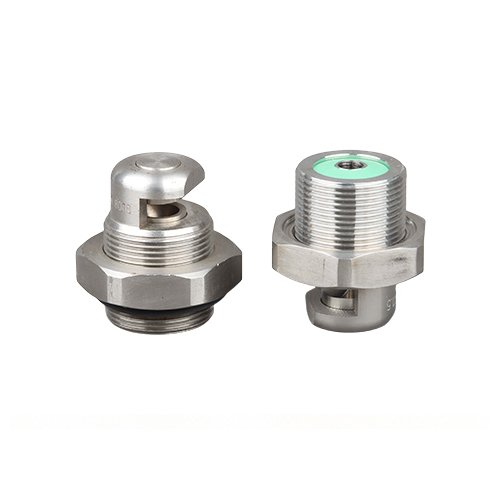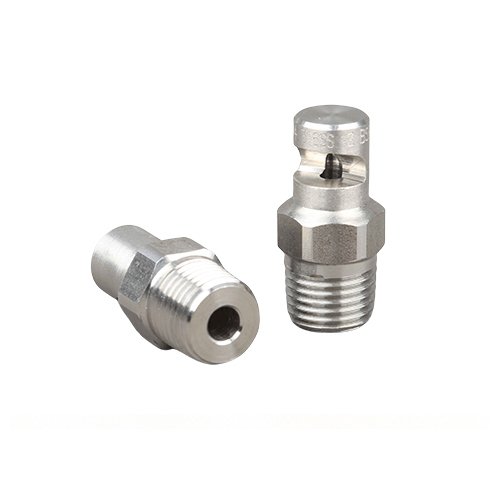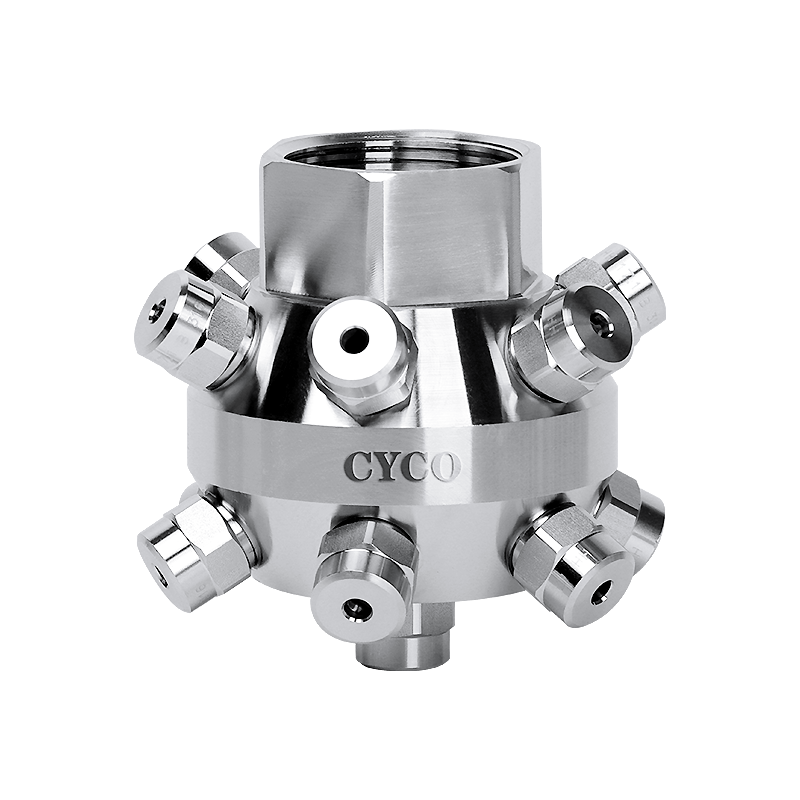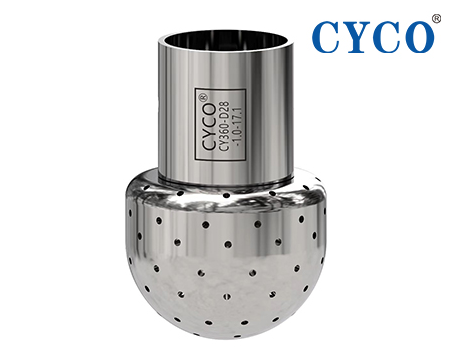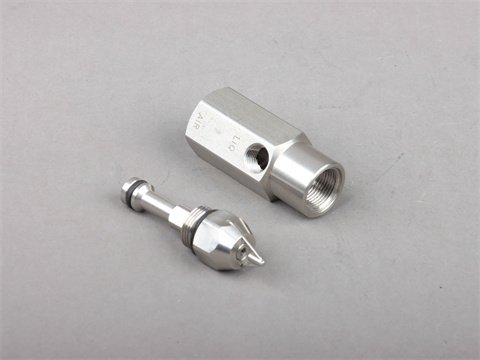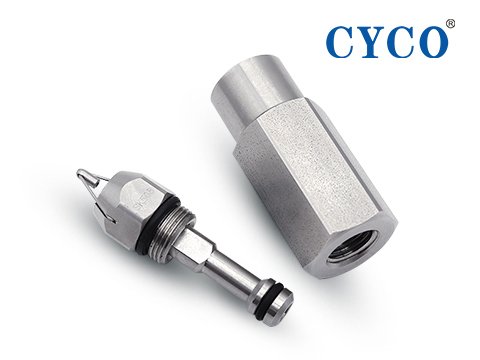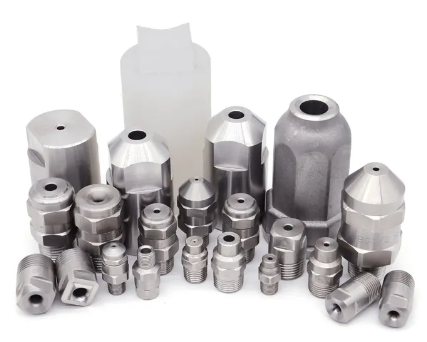
A waterjet nozzle is a device used to generate water jets that can be used for cleaning, cutting, machining and other applications.
Below are some detailed parameters of waterjet nozzles:
Jet pressure
One of the most important parameters. The higher the jet pressure, the stronger the impact of the water jet, the better the cleaning or cutting effect.
However, too high a jet pressure can lead to energy loss of the water jet and increase the consumption of water and the load of the equipment. Usually, the jet pressure of waterjet nozzles is between 200-600 bar.
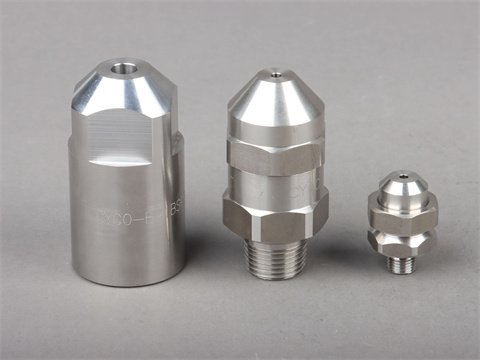
Flow rate
Refers to the amount of water that passes through the nozzle per unit of time. The higher the flow rate, the larger the diameter of the waterjet and the more efficient the cleaning or cutting. However, too high a flow rate increases water consumption and equipment burden.
Usually, the flow rate of waterjet nozzles is between 1-10 L/min.
Standoff distance
The distance from the waterjet nozzle to the cleaned or cut surface.
The size of the standoff distance directly affects the action time and impact effect of the waterjet.
In general, the smaller the standoff distance, the longer the action time of the water jet, the higher the efficiency of cleaning or cutting. But too small a standoff distance will increase the burden of equipment and cleaning difficulty.
Usually the standoff distance of the waterjet nozzle is between 1-20mm.
Diameter of the nozzle
The larger the diameter, the larger the diameter of the waterjet and the more efficient the cleaning or cutting will be. However, too large a nozzle diameter increases water consumption and the equipment burden.
Usually, the nozzle diameter of waterjet nozzles is between 1-10mm.
Angle
The angle between the nozzle axis and the cleaned or cut surface.
The size of the angle directly affects the direction of the waterjet and the impact effect. The larger the angle, the wider the action range of the waterjet, the higher the efficiency of cleaning or cutting. Too large an angle will increase the equipment burden and cleaning difficulty. Usually, the angle of the waterjet nozzle is between 0-60.
Materials
Directly affect the service life and corrosion resistance, commonly used materials include stainless steel, carbide, ceramics and so on.
Stainless steel nozzle has good corrosion resistance, but the hardness is low so it is easy to wear.
Cemented carbide nozzles have high hardness and good abrasion resistance but poor corrosion resistance.
Ceramic nozzle has excellent corrosion resistance and hardness, but the price is higher.
Precision of machining
It directly affects the spraying effect and service life. Machining accuracy includes the orifice diameter of the nozzle, the shape of the orifice and the sharpness of the orifice.
The higher the machining accuracy, the better the spraying effect and the longer the service life.
Applicable media
The media that can be used include pure water and abrasive solutions.
Pure water is suitable for general cleaning while abrasive solutions are suitable for cutting and machining with higher requirements.
Size of the interface
Standard interface sizes are usually used, including 1/4 inch, 3/8 inch, 1/2 inch and so on. The choice of interface size is determined by the requirements of the equipment and the actual application.
Operating temperature
Limited by the material.
Generally, the operating temperature of stainless steel nozzles is below 80℃, cemented carbide nozzles are below 60℃, and ceramic nozzles are below 150℃.
Conclusion
These parameters are very important for selecting and using the right waterjet nozzle.
In practice, it is necessary to select the appropriate parameters according to the specific needs and operating conditions to ensure that the best cleaning, cutting or machining results are achieved.
If you have any questions about waterjet equipment, accessories and maintenance, feel free to ask CYCO for help.